
Residual Neural Networks (ResNet): The Breakthrough That Transformed Deep Learning
In 2015, computer vision research witnessed a seismic shift when Kaiming He and colleagues unveiled their groundbreaking architecture at Microsoft Research. Their paper, “Deep Residual Learning for Image Recognition”, introduced a novel approach that revolutionised how machines process visual data.…

Latest Stories
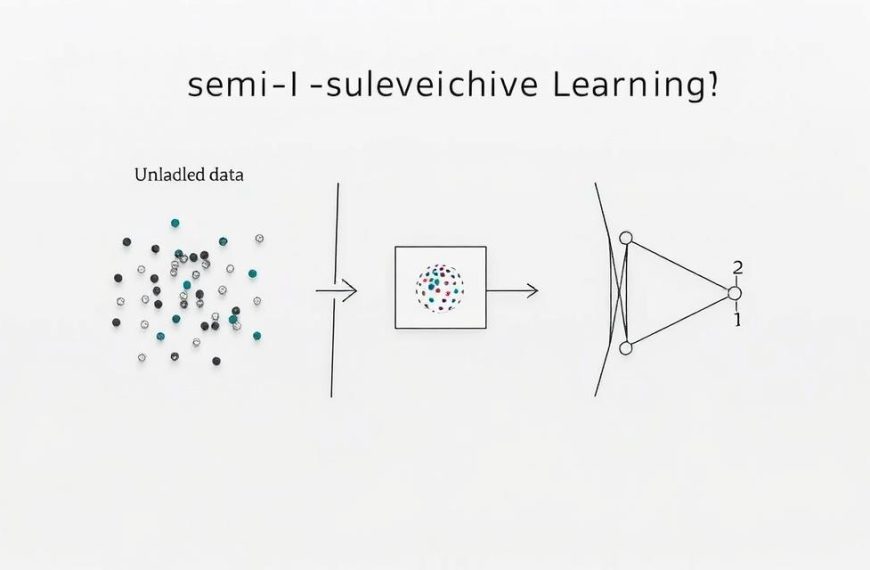
Semi-Supervised Machine Learning Explained: The Middle Ground of AI
In today’s data-driven landscape, artificial intelligence faces a critical challenge: balancing accuracy with resource efficiency. This is where semi-supervised techniques shine, combining strategic human guidance with the scalability of automated systems. Traditional approaches often force…
Residual Neural Networks (ResNet): The Breakthrough That Transformed Deep Learning
In 2015, computer vision research witnessed a seismic shift when Kaiming He and colleagues unveiled their groundbreaking architecture at Microsoft Research. Their paper, “Deep Residual Learning for Image Recognition”, introduced a novel approach that revolutionised…
Recurrent Neural Networks Explained: How They Remember and Predict
Traditional neural networks process data in fixed sequences, treating each input independently. This approach struggles with tasks requiring temporal awareness – like language translation or speech recognition. Here’s where recurrent neural networks (RNNs) revolutionise the…

GPU vs CPU for Deep Learning: Why Speed Matters in AI Training
Modern artificial intelligence development hinges on computational efficiency. As models grow more sophisticated, processing speed directly influences research timelines and commercial outcomes. Organisations prioritise architectures that handle complex algorithms swiftly, making hardware selection a strategic…