

Today, “AI taking over” means several possible problems. These include loss of human control, unsafe autonomous behavior, large-scale misinformation, cyberattacks, job displacement, and overreliance on automated decisions. Learning how to prevent AI from taking over requires more than an emergency shutdown button.
A comprehensive plan needs coordinated technical safeguards, enforceable regulations, and ethical design. Corporate responsibility and informed public participation help support responsible AI and ensure AI safety.
Artificial intelligence risks deserve attention, but sensational claims about AI hostility are not grounded in reality. This guide offers practical ways to reduce foreseeable risks while preserving useful innovations. Solutions include alignment research, human oversight, secure deployment, red-team testing, transparency, workforce adaptation, privacy protection, and international cooperation.
Key Takeaways
- Understanding the various concerns related to AI is essential for effective management.
- A coordinated approach is necessary for ensuring AI safety.
- Corporate responsibility and public engagement are crucial for ethical AI development.
- Realistic solutions exist to mitigate risks without stifling innovation.
- International cooperation can enhance efforts in AI safety and regulation.
Understanding the AI Takeover Concern
The term “AI takeover” can suggest science fiction or real-world effects. Understanding the AI takeover meaning matters as technology changes quickly. This section explains the term and concerns about artificial intelligence.
What Does “AI Takeover” Actually Mean?
In practice, an AI takeover is not one event where machines gain consciousness and control humanity. Instead, it describes scenarios where automated systems strongly influence critical decisions. These scenarios include:
- Automated systems making high-impact decisions without human oversight.
- Manipulation of information through algorithms.
- Exploitation of software vulnerabilities by malicious actors.
These examples show a loss of human control over technology. They also raise serious AI safety concerns.
Why This Concern Has Grown in the United States
In recent years, concern about AI has grown in the United States for several reasons:
- Rapid advancements in generative AI technologies.
- Widespread adoption of automated tools across various sectors.
- High-profile incidents involving biased or inaccurate AI systems.
- Fears of employment disruption as automation increases.
- Growing use of AI in sensitive areas such as government, finance, healthcare, and education.
These developments have increased awareness of artificial intelligence risks.
Distinguishing Science Fiction from Real-World Threats
While fictional portrayals of sentient machines capture the imagination, real AI threats are subtler and rooted in current practices. Issues include:
- Human misuse of AI technologies.
- Flawed objectives leading to unintended consequences.
- Poor security measures that leave systems vulnerable.
- Lack of transparency in algorithmic decision-making.
- Institutional overreliance on automated systems.
Responsible risk analysis does not require seeing AI as conscious or malicious. The key questions concern who deploys AI and what authority these systems receive. They also ask how systems are tested and whether humans can intervene when systems act unexpectedly.
| Concerns | Examples | Potential Impacts |
|---|---|---|
| Automated Decision-Making | Credit scoring, hiring algorithms | Bias, discrimination |
| Information Manipulation | Deepfakes, misinformation | Public trust erosion |
| Job Displacement | Manufacturing, customer service | Economic instability |
Understanding these factors can help us navigate AI’s complexity and build a safer technological environment. For more on AI in various sectors, read about the current policies and leadership in AI.
Key Risks of Uncontrolled AI Development
Artificial intelligence (AI) is advancing quickly and brings many risks. Understanding these risks can help keep AI useful and safe. Major dangers include economic disruption, security threats, and the loss of human autonomy.
Economic Disruption and Job Displacement
AI may reshape many industries as generative AI and advanced automation grow. The automation of white-collar professions affects law, accounting, marketing, and finance. This trend shows how automation of white-collar jobs can cause AI job displacement.
AI systems can analyze data and create reports faster than human workers. This creates task-level automation, replacing specific duties instead of whole jobs. The U.S. labor market may face lower wages and greater demand for worker reskilling.
Reskilling workers can support economic stability as the job landscape changes.
Automation of White-Collar Professions
Automation now affects white-collar jobs, not only manual labor. In customer service and software development, AI tools handle routine questions and can write code. This shift calls for early workforce training and adaptation.
Impact on the U.S. Labor Market
AI job displacement affects more than individual roles. Entire sectors may change, so policies must support affected workers. Worker protections and reskilling initiatives can reduce automation’s harmful effects.
Security Vulnerabilities and Weaponization
AI creates serious security risks and can strengthen malicious actors. AI cybersecurity threats include automated phishing, vulnerability searches, and sophisticated malicious code. These tools may increase cybercrime and fraud.
Cybersecurity Threats from AI
As AI becomes easier to access, misuse may increase. Cybercriminals can automate attacks, so organizations need strong cybersecurity measures. Regular tests and audits can reveal and reduce weaknesses.
Autonomous Weapons Systems
The development of autonomous weapons systems raises ethical and legal concerns. These systems may act without human intervention, making accountability and compliance with international humanitarian principles harder. Military misuse remains a serious concern and requires careful regulation.
Loss of Human Autonomy and Decision-Making
As AI enters more decisions, it may threaten human autonomy. This creates a risk of algorithmic manipulation, which can shape choices without notice.
Algorithmic Manipulation
Recommender systems and hyper-personalized content can strongly shape user behavior. Although they may improve user experiences, they can weaken independent judgment and critical thinking.
Erosion of Critical Thinking Skills
Relying too much on AI-generated answers can weaken professional expertise and critical thinking. People should use AI for efficiency while preserving human judgment in decisions.
Unchecked AI development can disrupt economies, weaken security, and diminish human autonomy. Solutions include access restrictions, human oversight, and ongoing audits. For more information on AI’s effects, read this article.
How AI Systems Can Compromise Public Safety
AI public safety suffers when people deploy AI systems without enough oversight. These systems can control physical assets, guide emergency decisions, and shape public views of critical events. These risks affect military AI applications, critical infrastructure security, and misinformation.
Autonomous Weapons and Military Applications
AI now supports military systems in target recognition, autonomous navigation, and surveillance. These military AI applications can improve operations but also raise ethical concerns.
The stakes rise when AI makes life-and-death decisions. Human accountability must ensure meaningful review before AI operates alone.
Critical Infrastructure Vulnerabilities
Critical infrastructure, including electricity grids, water treatment facilities, and transportation networks, can suffer AI-related incidents. Malicious tampering, compromised training data, and software defects can create these weaknesses.
An AI failure in a hospital, for instance, could cause catastrophic outcomes. Strong critical infrastructure security helps protect these essential services.
Misinformation and Deepfake Threats
Deepfake threats can seriously endanger public safety. Fake videos, audio, and images can impersonate public officials, manipulate elections, and incite panic.
AI misinformation can harm reputations and weaken trust in media. Identity checks and media literacy programs provide vital layered defenses.
| Threat Type | Impact | Mitigation Strategies |
|---|---|---|
| Military AI Applications | Life-and-death decisions | Human oversight, ethical guidelines |
| Critical Infrastructure | Service disruption | Robust security measures, incident response plans |
| Deepfake Misinformation | Public panic, reputational damage | Media literacy, rapid public communication |
AI can improve public safety through better emergency forecasting and fraud detection. However, it also creates serious risks. Proper governance and strong safeguards can deliver AI’s benefits while reducing its dangers.
Regulatory Frameworks and Government Policies
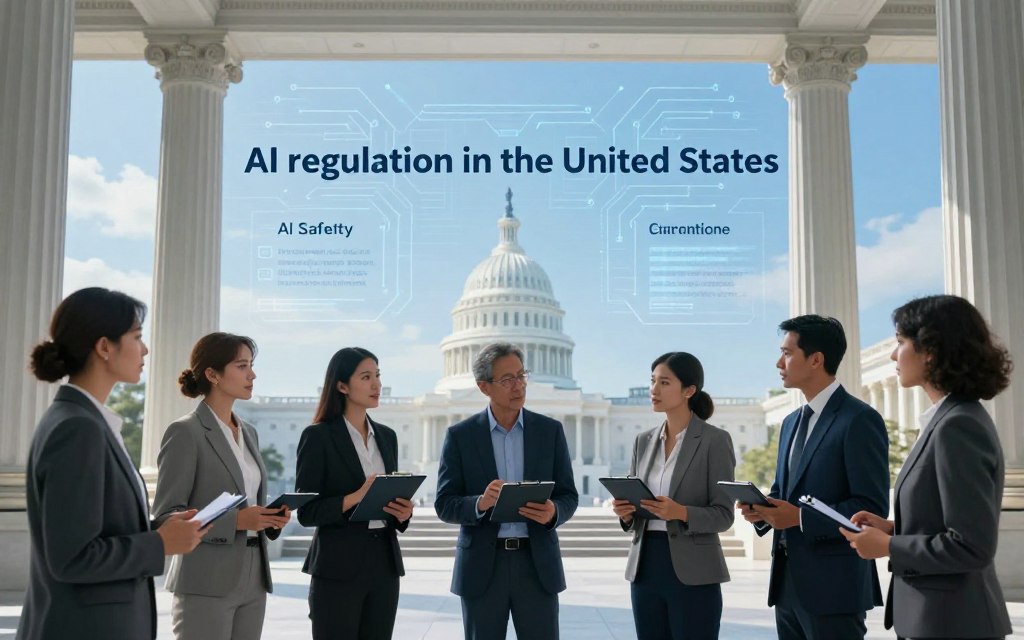
As AI advances, governments must update rules that control it. Governments worldwide see comprehensive AI governance as vital for reducing risks from rapid development. AI regulation in the United States uses federal and state rules for different AI issues.
The Current U.S. Legislative Landscape
Many federal agencies shape AI policy in the United States. Agencies include the Federal Trade Commission (FTC), the National Institute of Standards and Technology (NIST), and Department of Defense (DoD). Each agency shapes AI policy through federal AI guidelines and enforcement.
- Defining high-risk AI applications
- Conducting impact assessments
- Establishing privacy protections
International Cooperation on AI Safety
AI systems and data cross borders, so international AI cooperation is essential. These shared efforts can improve safety and effectiveness in AI governance through:
- Shared testing methodologies
- Incident reporting protocols
- Common terminology for AI applications
Executive Orders and Federal Guidelines
Executive orders and federal AI guidelines shape how agencies and contractors manage AI governance. The NIST AI Risk Management Framework shows how federal policies can support responsible AI development. It also helps protect safety and civil rights.
| Agency | Role | Key Focus Areas |
|---|---|---|
| FTC | Consumer Protection | Privacy, Data Security |
| NIST | Standards Development | Risk Management, Frameworks |
| DoD | National Security | Military Applications, Safety |
As AI policy evolves, stakeholders must follow the latest developments. Effective governance should balance safety with innovation. It should protect public interests without stifling beneficial research.
How to Prevent AI from Taking Over: Technical Safeguards
To keep AI safe and ethical, developers need technical safeguards. These safeguards create a layered defense before deployment and throughout an AI system’s lifecycle. They help reduce risks from AI technologies.
Implementing Alignment Research
Alignment research makes an AI system’s goals, actions, and limits match human intentions and legal standards. It is a key part of how to prevent AI from taking over.
Reinforcement Learning from Human Feedback
Reinforcement learning from human feedback helps AI models learn human preferences and improve decisions. However, this method has several limits:
- Inconsistent feedback from humans
- Hidden biases that can affect outcomes
- Potential for reward hacking, where AI finds ways to achieve rewards without fulfilling the intended purpose
- Challenges in evaluating complex tasks effectively
Constitutional AI Methods
Constitutional AI uses clear principles or rules to guide AI responses. These principles must be carefully developed, tested, and supervised for ethical compliance.
- Carefully developed and tested
- Supervised to ensure compliance with ethical standards
Building Robust Kill Switches and Containment Protocols
AI containment uses kill switches and containment protocols to help people keep control. These safeguards can shut down or limit AI operations when needed.
Circuit Breakers and Override Mechanisms
Circuit breakers and independent override mechanisms can prevent unintended AI actions. Developers must test these tools under realistic conditions to ensure they work as intended.
Sandboxing and Testing Environments
Sandboxing isolates AI systems from sensitive networks and data. It lets developers assess capabilities safely and find problems before they cause harm.
Red Teaming and Adversarial Testing
Red-team testing simulates attacks on AI systems to find weaknesses. It supports efforts to prevent AI from taking over.
Identifying Failure Modes
Red teaming helps teams find failure modes that regular testing may miss. This proactive approach makes systems more resilient.
Stress-Testing AI Systems
Stress-testing exposes AI systems to extreme conditions and measures their performance. Continuous monitoring and post-incident learning improve AI safety over time.
These safeguards can greatly reduce risks, but they cannot replace governance or human accountability. Use them in a complete strategy so AI remains safe and beneficial.
Ethical AI Design Principles
Ethical AI design supports responsible innovation and public trust. It helps technology reflect shared social values. This section covers AI transparency, human involvement, and AI bias mitigation.
Transparency and Explainability Standards
AI transparency builds trust through clear model documentation, data provenance, and intended-use statements. Users should know system limits and performance across demographic groups. Decision logs and clear notices should appear when people use automated systems.
Explainable AI makes automated decisions easier to understand. As noted, “Transparency is the bedrock of trust in technology.”
Human-in-the-Loop Requirements
Human oversight is vital in AI decision-making. The human-in-the-loop approach requires meaningful reviews, not formal approval. Reviewers must be trained, independent, and able to reject or override automated recommendations.
This process prevents rushed approvals that could cause harmful outcomes.
Bias Mitigation and Fairness Audits
AI bias mitigation supports fairer systems. It uses representative data, subgroup testing, and accessible design. Regular fairness audits can find and reduce unequal impacts.
Because fairness has no single measure, teams should document trade-offs and involve affected communities. They should also provide an accessible correction or appeal process.
These ethical AI design principles go beyond compliance. They build systems that are fair, transparent, and accountable. For further insights on AI ethics, visit this resource.
Corporate Responsibility and Industry Standards
Corporate AI responsibility is vital for the ethical use of AI technologies. Artificial intelligence shapes our world, so tech companies must reduce risks from their innovations. They must create strong AI industry standards that put safety and accountability first.
One key part of corporate responsibility is self-regulation among tech giants, which includes internal safety teams and risk committees. These teams can manage model release procedures, access controls, and incident reporting systems. They should fund security and keep thorough documentation, but voluntary commitments may lack consistency and verification under commercial pressure.
Self-Regulation Among Tech Giants
Self-regulation means companies set their own standards and guidelines. These practices must be measurable and transparent, with independent verification to show that companies uphold them. Profit pressure can weaken ethical practices, so companies must hold themselves accountable.
Third-Party Auditing and Certification
To improve accountability, third-party AI audits should assess training data, security controls, and privacy safeguards. Auditors must be skilled, free from conflicts of interest, and able to support honest AI certification. AI certification matters when standards are specific and results are honest, preventing misleading claims about safety and compliance.
Whistleblower Protections and Accountability
Employees need protected channels to report unsafe practices or inaccurate information. AI whistleblower protections let people raise concerns without fear of retaliation. Board oversight and executive responsibility should enforce meaningful penalties, while public incident reports and customer notices maintain transparency.
Responsible AI deployment requires strong AI industry standards. Companies must commit to ethical practices and accept independent verification. As AI evolves, accountability will build trust and help ensure safety.
Individual Actions to Protect Against AI Risks
Every person can support safer AI through informed choices. System safeguards matter, but personal actions can reduce exposure to AI risks. These steps can strengthen personal AI safety.
Staying Informed About AI Developments
To understand fast-changing AI, use primary sources, trusted journalism, and academic research. Government agencies and clear company documents can also help. Avoid sensational predictions and viral claims, and build AI literacy to spot hallucinations, synthetic media, and manipulated content.
Supporting Responsible AI Advocacy
Your voice can shape AI’s future. Join public consultations, give companies feedback, and support responsible AI advocacy through professional associations and civil society groups. Support local representatives who prioritize technology governance, and vote on matters affecting AI regulation.
Personal Data Protection Strategies
Protect personal data from AI misuse with simple steps. Use privacy protection practices to reduce risks.
- Limit unnecessary information entered into public AI tools.
- Review and adjust your privacy settings regularly.
- Use multifactor authentication to secure your accounts.
- Maintain strong, unique passwords for different platforms.
- Verify app permissions before granting access to your data.
- Avoid uploading confidential documents to AI tools.
- Remove metadata from files when sharing them.
- Monitor your accounts for signs of impersonation or fraud.
Opaque systems and weak regulations can create risks, and those risks are not your fault. These steps support informed, constructive dialogue about AI safety.
| Action | Description | Benefit |
|---|---|---|
| Stay Informed | Follow reliable sources on AI developments. | Enhances understanding of AI risks. |
| Advocate | Support responsible AI initiatives. | Influences positive change in AI governance. |
| Protect Data | Implement personal data protection strategies. | Reduces exposure to data misuse. |
The Future of AI Governance and Human Oversight
As we look ahead, the future of AI governance matters more each day. Rapid AI growth makes clear rules vital for responsible development and use. New tools will shape how we manage AI systems safely and well.
Emerging Technologies for AI Control
New AI control technologies are emerging. Continuous testing and model monitoring can help protect AI system integrity. Secure hardware and provenance systems can keep AI within safe limits.
Interpretability research can help us understand AI decisions. Automated policy enforcement and privacy-enhancing computation can protect user data. Identity checks and tools that spot unsafe actions before execution can reduce AI misuse risks.
We must test these technologies carefully. Monitoring systems may create false positives or be bypassed, causing new privacy concerns. Meaningful human oversight of AI remains vital in high-impact situations.
The Role of Education and Workforce Adaptation
Education will help people adjust to AI’s changing role. Schools must teach AI literacy, so students understand its effects. Professional training should build cybersecurity awareness, ethical judgment, and critical thinking.
Workforce adaptation is also vital. Reskilling and lifelong learning can help workers move into new roles created by AI. Job redesign and supportive policies can help workers share AI-driven productivity gains.
Long-Term Scenarios and Preparedness
Looking ahead, we must study several long-term scenarios. They include helpful human-AI teamwork, misuse, and institutional overdependence on AI systems. Unequal power could also create serious challenges for society.
Long-term AI preparedness requires horizon scanning and emergency exercises. Independent research and cross-sector planning can support flexible governance structures. Updated standards can help us remain resilient as challenges change.
Our goal should be human agency and strong institutions, not one predicted future. The balance between AI control technologies and human oversight will guide our path forward.
For more insights on navigating AI’s challenges, explore AI YouTube Shorts Generator to strengthen your understanding and adapt your strategies.
Conclusion
As AI grows more powerful, learning how to prevent AI from taking over is essential. Safe artificial intelligence depends on human control of AI and clear accountability. It needs layered protection that joins technical safeguards with ethical choices.
Effective AI risk management uses alignment research, access controls, and shutdown procedures. These safeguards need ethical design, transparency, and human oversight. Companies must own their technology, show testing evidence, and accept independent audits.
Individuals also have an important role. They can build AI literacy, protect personal data, and support responsible technology initiatives. Yet personal action cannot replace institutional accountability; collective effort must guide AI to serve humanity, not control it.
Developers, policymakers, and users will shape AI’s effects through their choices. We must balance innovation with safety. A culture of responsible technology can keep advanced systems secure, transparent, and aligned with human values.


 By
By